
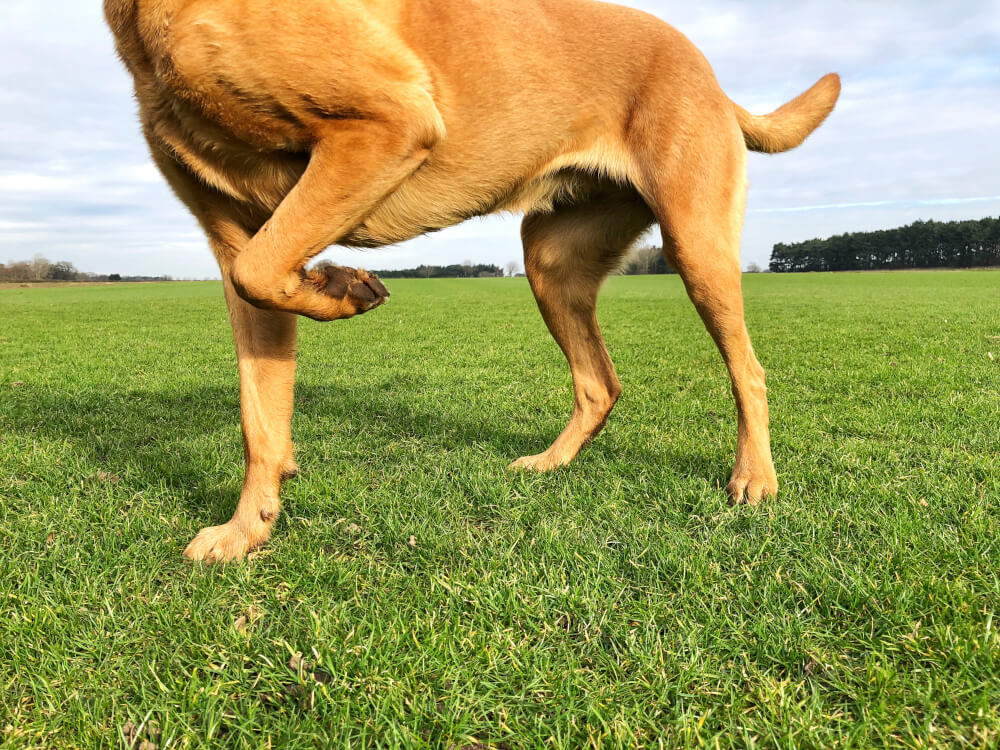
A sudden limp after a game of fetch, a jump off the couch, or an enthusiastic zoomie around the yard can be more than a minor injury. A dog limping on their back leg may be experiencing a torn cranial cruciate ligament, often called a CCL tear. This important knee ligament helps stabilize the joint, and when it’s damaged, everyday activities become painful and difficult. For some dogs, knee surgery may be the best way to restore stability, comfort, and mobility.
Understanding a Torn CCL in Dogs
The cranial cruciate ligament is located inside the knee, or stifle, and helps keep the joint stable during movement. When it tears, your dog may suddenly stop putting weight on the affected leg or develop a noticeable limp. In some cases, the damage happens gradually, with symptoms becoming more obvious over time.
Signs of a Dog CCL Tear
A dog CCL tear can look different from one dog to another.
Signs include:
- Limping or carrying a back leg
- Difficulty getting up or sitting down
- Reluctance to run, jump, or climb stairs
- Swelling around the knee
- Decreased activity
- Shifting weight away from the affected leg
Some dogs may seem better after resting, only to start limping again once they get moving. That can make it tempting to chalk things up to a little soreness, but knee injuries deserve veterinary attention.
Diagnosing a Knee Injury
Our veterinarians will evaluate your dog’s gait, examine the knee, and look for signs of instability. Diagnostic imaging is recommended to understand your pet’s injuries better, and help create a treatment plan. At Glenridge Animal Hospital and Referral Centre, advanced imaging technology is available to assist with orthopedic surgical planning.
Treatment depends on your dog’s size, age, activity level, overall health, and the severity of the injury. Some dogs may be managed with rest, medication, weight management, and rehabilitation. Others may benefit from surgery to stabilize the knee.
Dog Knee Surgery & Recovery
When surgery is recommended, the goal is to restore stability to the knee so your dog can return to a more comfortable and active life. Glenridge Animal Hospital offers cranial cruciate ligament repair using the Z-Lig method, a synthetic ligament technique designed to stabilize the stifle after a CCL rupture.
Naturally, one of the biggest concerns for pet parents is the cost of cruciate surgery. The total cost can vary depending on diagnostics, anesthesia, surgical technique, medications, and follow-up care. Our veterinary team can provide an estimate based on your dog’s individual needs.
Recovery is just as important as the surgery itself. Your pet will need restricted activity, medication, and a gradual return to normal exercise. Explaining to your dog that they are on bed rest is not easy, and patience will definitely be part of the treatment plan.
Get Your Dog Back on All Four Paws
A persistent limp should never be ignored, especially when it involves a back leg. Early evaluation can help identify a torn ACL in dogs, determine the extent of the injury, and get your pet started on the right treatment plan.
If your dog is limping or you suspect a CCL injury, contact Glenridge Animal Hospital in St. Catharines to schedule an examination. Our veterinary team can help you understand your options, including knee ligament surgery for dogs, and guide you through every step of your pet’s care.